
|
Beyond Recycling… Compostable and Biodegradable Products
Returning Waste to the Earth… Not Landfill
About half of what we send to landfill is compostable and buried for ever at great cost to us all, producing harmful methane, toxic leachate and unsafe land… so why send it there!
Friendlypak has products like packaging that are compostable and convenient systems that allow this valuable packaging waste along with nutrient rich food waste to be composted and spread above ground, to enhance the environment, not destroy it.
The cost to send waste to landfill is increasing; Friendlypak products and systems can reduce this cost. They also contain renewable and sustainable resources and are guaranteed not to last…
For more info… About Us About Founder & MD
About Us
This is a true story… it just hasn’t happened yet.
Sustainability - includes thinking differently and doing things a better way.
Waste minimization initiatives are meant to reduce the amount of rubbish we send to landfill. The 4 ‘R’s: Reduce, Reuse, Recover and Recycle have achieved a lot, they are well promoted and practised, but they are not enough. Recycling only saves about 25% of waste… What about the rest? ...
Is there hope Beyond Recycling? … Of the waste going to landfill, about half is compostable. The Friendlypak mission is to save this 50% with compostable and biodegradable products and systems. Our mission sounds ambitious but 50% is absolutely achievable with current technologies, Austria was doing more than this in 2002.
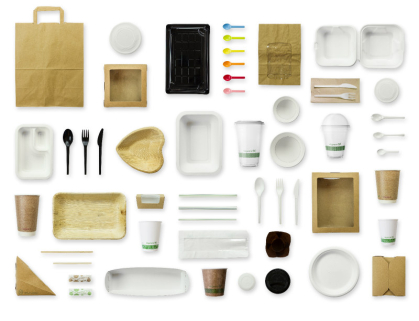
Recycling is good but does require wares to be returned to a point of origin for processing (extra cost and effort), unlike compostable products and sustainable, crop origin materials they can be returned to the earth anywhere to make the system or cycle work.
Our planet has limited ability to absorb our pollution and supply our resources. Living on a finite planet means we cannot take, plunder, produce and consume; then dump and pollute forever. Our current society and lifestyles are based on a ‘linear’ process where most of our resources are taken for free from non-renewable sources; then exploited without consideration of their value, their true cost or the future of those resources. At the other end of the process the product or service is discarded, again without consideration for where it goes, how long it will remain, the legacy and pollution created.
A change to a ‘cyclic’ process however addresses these issues, like in nature where the waste from one ecosystem is the raw material for another. Renewable resources are used then returned from where they came, able to be reused again and again… Cradle to Cradle not Cradle to Grave… In nature there is no waste, nature has solutions, typically we are either ignoring them, abusing them or we haven’t discovered them yet. Friendlypak focuses on both the sustainability of resources used and the waste generated.
“Pollution is just unused waste” - Bill Mollison, founder of Permaculture.
Our whole society and success is measured by maximising production, growth and consumption. Success however should also include:
-
Sustainability and accountability
-
Consideration of the resource provision
-
Their true costs or value
-
The waste left behind after a life cycle.
‘Triple bottom line reporting’ is a measure that more business’s and corporations are using. This is where three measures of accountability are required: financial, environmental and social reporting rather than just the traditional financial bottom line. It is also exciting that business is discovering that improving their environmental and social performance also improves their financial bottom line, working with nature rather than exploiting it is actually ‘a better way’. According to Mollie Beattie, director of the United States Fish and Wildlife Service - "In the long term, the economy and the environment are the same thing. If it is un-environmental it is un-economic. That is the rule of nature." More companies are making their supply chains 'greener' not only because it is seen as 'doing the right thing' but because it is the 'right thing to do'.
Trying to live sustainably is one of the greatest challenges technically, to our society, to our economy and to the way we think. The speed of change, our selfish natures and the misinformation from those with vested interests is also hard to come to terms with. “There are none so blind as those who will not see, none so deaf as those who will not hear.” There is however hope; products of consumption and products of service can be conceived by intelligent design from the beginning in such a way that their material contents are beneficial, safe and profitable. Such products and materials can circulate as either ‘technical’ or ‘biological’ nutrients in cycles and be re-used not dumped and wasted.
Friendlypak is not anti-plastic in fact plastic is an ideal material for many applications and often has the smallest ‘environmental foot print’. However like anything in life it needs to be selected and treated correctly and can be harmful in some circumstances. Selection needs to include end of life not just the application. There are many applications where materials like plastic, metal and glass are over engineered; such as disposable products and packaging; convenient, but they do not need to last forever.
Large quantities of our finite resources are often wasted producing products that, while functional, have a very short life then discarded creating increasingly serious waste problems and pollution. The most serious is plastic, this video clip shows why The Synthetic Sea
A summary from the ‘Independent.co.uk’ by Kathy Marks, Asia-Pacific correspondent and Daniel Howden. Tuesday, 5 February 2008
“Plastic Soup twice the size of the USA; two vortex of plastic waste blight the Pacific.
Estimated to be more than 100 million Tons. Professor Karl co-ordinator of an expedition with Algalita in search of the garbage patch late 2008 said that plastics are so durable that objects half-a-century old have been found in the north Pacific sea dump. "Every little piece of plastic manufactured in the past 50 years that made it into the ocean is still out there somewhere," said Tony Andrady, a chemist with the US-based Research Triangle Institute. According to the UN Environment Programme, plastic debris causes the deaths of more than a million seabirds every year, as well as more than 100,000 marine mammals. Syringes, cigarette lighters and toothbrushes have been found inside the stomachs of dead seabirds, which mistake them for food. Plastic is believed to constitute 90 per cent of all rubbish floating in the oceans. Dr Eriksen said the slowly rotating mass of rubbish-laden water poses a risk to human health, too. Hundreds of millions of tiny plastic pellets or fragments act as chemical sponges attracting man-made chemicals such as hydrocarbons and the pesticide DDT. They then enter the food chain. "What goes into the ocean goes into these animals and onto your dinner plate. It's that simple," said Dr Eriksen.”
In every square km of ocean there is over 28,500 pieces of plastic on the surface. What we do not know is how much plastic also litters the ocean floor as only a proportion of plastics float.
There is however hope, alternatives that are still fit for purpose, have very low environmental impact, are sustainable, renewable, non-toxic and can be composted back to the earth from where they came.
Friendlypak adds ’Return’ so the 4 ‘R’s become 5, Reduce, Reuse, Recover, Recycle and Return. When Friendlypak products are used they are returned to the earth from where they came. Friendlypak products use sustainable renewable materials that have been grown. These compostable and biodegradable products can be separated from the general waste stream along with organics to be composted back to humus and energy recovered from gas emissions. This all requires specialized marketing, product and material knowledge, development, promotion, education, lobbying and even legislation. Friendlypak was formed to promote and provide these services.
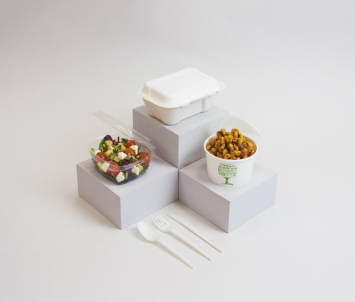
Since 2004 Friendlypak has been the market leader, offering environmental product and system solutions for councils, government departments, corporations, small businesses and consumers. Every consumable product in our range is carefully assessed and must meet the following criteria:
-
be compostable and/or biodegradable
-
contain renewable resources
-
be grown & manufactured sustainably
-
contain no toxic or harmful ingredients
-
have a superior TLCA (total life cycle analysis)
-
have a reduced environmental foot print
-
be traded fairly
-
be produced without exploitation or harm to people or animals
-
reduce dependence on oil
Landfill Rubbish sites are bad, why?
-
They are an increasing financial cost to us all
-
A toxic legacy for generations
-
Sources of pollution for our land and water
-
Will be waste mountains one day
-
Produce Methane, one of the worst climate change gases
-
And there are no ‘suitable’ sites
They will not go away… and we need more!!
These photos of Naples, show the results of their landfills becoming full, their rubbish has backed up into the streets. The situation has become so desperate that in May 2008 the Government declared their landfills to be “Strategic Government Assets” and placed armed solders on duty to control them.

Organics are the best waste stream if turned into valuable compost but if not organics are one of the worst components of a landfill. Being mostly water the water slowly releases, filtering through the landfill trash collecting heavy metals, chemicals, poisons, carcinogens and other pollutants. Modern Landfills are lined with a membrane but it is only a mater of time before they will rupture or leak. The accumulated cocktail of toxic leachate will leak into our water systems and soils. A landfill containing organics is a long-term pollution time bomb, a liability for generations.
An Environment Ministry Survey March 2003 found of 115 operating landfills in NZ
-
90% have a medium to high risk of contaminating surface water run off.
-
74% risk contaminating ground water.
Organics in landfill also decompose an-aerobically producing ‘climate change’ gasses, primarily Methane (23 times more harmful than CO2). It is only a mater of time before councils and ratepayers will be required to account for emissions from landfills in their emissions footprint.
In Australia - September 2008 - a brand new multi-million dollar upmarket housing development had to be evacuated indefinitely due to serious fire risk and health and safety issues. The development had been built near an old landfill that was claimed to be safe (where have we heard that before) but high Methane levels in the new homes have made the new owners sick and their property values worthless.
What is most pertinent is that organics do not need to be there! Organics have value; as a source of free energy if processed through a bio digester, as mulch or as compost. When used as sterilized mulch, organics suppress weeds and conserve water. When used as compost organics improve the quality of our soil, our health, the food chain, eco systems and all life.
According to Hardin Tibbs CEO of Synthesys Strategic Consulting in the UK… “we have the technology to achieve a sustainable future all we need is to change the way we think”. Sustainability also means… thinking differently and doing things a better way… “We cannot solve the problems we have created with the same thinking that created them” - Albert Einstein.
‘Re-think’. Call us 0800 rethink (738 446).
Founder and Managing Director
Kevin Graham - Years ago I became concerned at the change from ‘deposit based’ returnable and reusable packaging to ‘disposable’ packaging even though my career, at the time, helped develop disposable packaging. I did not appreciate the damage and cost to the environment or the impact that such waste would have on future generations and lifestyles. Since then I have become more alarmed the more I have learnt.
I did contribute obscenely to the waste mountain as my career involved designing and developing plastic packaging. I have since however ‘gone over to the other side’ to help develop and provide alternatives to disposable packaging; specifically products and materials that do not last forever, do not pollute, depend on oil, squander non-renewable resources or destroy our increasingly scarce and valuable land with rubbish dumps.
Years ago I recall being quite excited when asked to test a newly developed biopolymer that was compostable, the initial trials were very much failures but for the first time I realised that there could be biodegradable alternatives to plastics that were still fit for purpose. I wanted to see this innovation succeed so the concept for Friendlypak was born.
The concept was to promote compostable and biodegradable products and materials ‘ Cradle to Cradle’ not ‘Cradle to Grave’ to meet a growing world demand and need. The concept included the separation of these products from the general waste stream along with organics to be composted back to the earth from where it came and energy recovered from gas emissions. This all requires specialized marketing, product and material knowledge, development, promotion, education, lobbying and even legislation. Friendlypak was formed to promote and provide these services.
As a Plastics and Packaging Engineer I have had more than 25 years experience creating and designing a number of ‘firsts’ and successful products, services and innovations. For example the first plastic (PET) soft drink bottles and the first carbonated plastic bottle closures in NZ replacing the glass bottle and aluminium closures for Coca Cola and Pepsi. The first straight walled plastic and glass reinforced paint pails and the first multi-layer plastic soft drink bottle in NZ; the multi-layer bottle looked the same but consisted of three layers of PET where the middle layer was 100% post consumer waste recycled PET. This was a successful $10 million project completed early and under budget. Other products worth noting include the design of ‘PUMP’ the market leading water bottle, the first plastic (PET) beer bottle in NZ for events. For Australia the first multi layer ‘shelf stable’ beer bottle that ‘out performed’ glass, this bottle was designed to process through the same filling and pasteurising production line as a glass bottle without any requirement for a brewery to modify their equipment. During my time working for leading corporations, various positions were held including, Project Engineer, Production Manager, Operations Manager, R & D Manager and Design Engineer. These rolls included designing new products the design and construction of moulds, tooling and factory production facilities, services and equipment to manufacture these products. One such project was the reconstruction of a failed water bottle manufacturing plant in Beijing.
My career has included the establishment and half ownership of a food production company. Founder and Managing Director of; K n K Consulting Ltd – a Consulting Engineering company and Friendlypak – Compostable and Biodegradable products. And more recently cofounder of Naturetech NZ – a Biomimicry Technology company.
I have passionate interest in many fields, if only there were more hours in the day to pursue them. These include: family and friends, health & fitness, engineering and design, food & wine, motorcycles, organics, biodynamics, Permaculture and the Transition Town movement, all in no particular order. I would like to add that these have all suffered during the establishment of Friendlypak. It has been much more difficult than anticipated but I guess that is not unusual for the birth of anything worthwhile. I have learnt to trust that the next great thing is just around the next disappointment.
Change and innovation excites me, knowing there is always a better way. I believe in ‘triple top and bottom line reporting,’ developing business relationships in a participative environment with the empowerment of others and good governance. I also support the basic philosophies of total, company wide quality management. Examples being Kaizen (Japanese for continuous improvement) the original team work and quality revolution introduced by Dr Edwards Deming; and practical applications of ‘Excellence’ preached by Tom Peters.
An American Indian proverb is appropriate today: “Treat the earth well. It was not given to you by your parents, it was loaned to you by your children.” There are certainly serious issues facing the world and future generations today, we are bombarded with doom and gloom and bad news always out sells the good. There are however many innovative solutions flourishing or developing all over the world. In the sustainable field that I now work and live I am fortunate to meet many positive innovative people and discover many exciting solutions and great causes. I am continually encouraged to be working towards making a difference and also amazed at the speed of change for the better in so many fields. From what I have learnt a sustainable world is indeed possible, I have a vision and commitment for conservation, stewardship and the treatment of people, animals and the environment with care and respect.
It is interesting that some initiatives have been considered fringe, alternative or even crazy but are now recognized as having real merit, providing real solutions and hope for the future and our only planet. These include: Organics, Biodynamics, Permaculture, biodiversity, conservation, ‘intelligent design’, the ‘village’ concept, reduced consumerism, local living economies, triple top and bottom line accountability, rain forest conservation, clean production, fair trade, zero waste, transition towns, green chemistry, Biomimicry and industrial ecology.
Sir Peter Blake once said, “Having vision is not enough. Change comes through realising the vision and turning it into a reality. It is easy to espouse worthy goals, values and policies; the hard part is implementation”… So do it…
|